All Categories
Featured
Table of Contents
Resistance to change and cultural barriers within the organization can impede the adoption of cloud technologies and procedures. Organizations can get rid of resistance to alter by cultivating a culture of innovation, collaboration, and constant learning. They should communicate the advantages of cloud migration and improvement efforts to stakeholders, include workers in the decision-making process, and offer assistance and training to relieve the shift.
By dealing with these common obstacles proactively and embracing finest practices, organizations can navigate the complexities of cloud migration and change better, drive successful results, and unlock the full capacity of cloud computing. Netflix is a prime example of a business that has undergone a successful cloud improvement. At first, Netflix depended on conventional data centers to host its streaming service.

In response, Netflix moved its entire facilities to the cloud, particularly to Amazon Web Services (AWS). This relocation made it possible for Netflix to scale its services worldwide, manage peak demand throughout popular show releases, and innovate quickly with brand-new features. Airbnb, the popular online marketplace for lodging and tourism experiences, likewise underwent a considerable cloud improvement.
As the business broadened globally and experienced exponential growth, it required a more scalable and flexible facilities., a leading provider of medical imaging devices and healthcare IT solutions, embarked on a cloud change journey to modernize its offerings and enhance client experience.
Upgrading Your IT Infrastructure for the 2026 Shift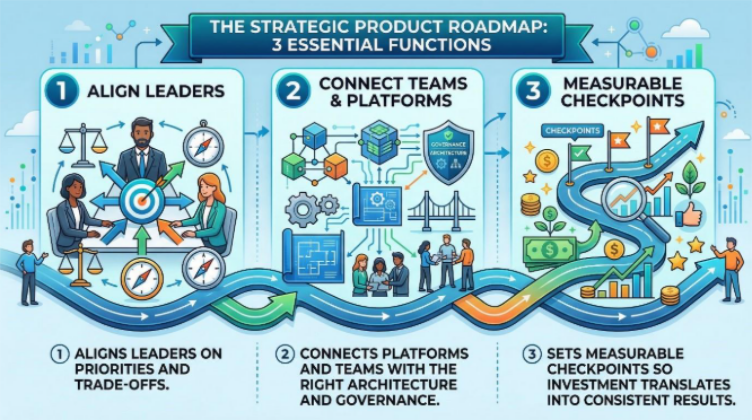
This shift made it possible for doctor to access and examine medical data more efficiently, improve diagnostic precision, and deliver better client care. These real-world examples demonstrate the transformative power of cloud computing and its capability to drive development, enhance efficiency, and enable organizations to attain their organization goals effectively. Cloud change and digital change belong however distinct concepts.
Is Your Organization Prepared for 2026?
This includes transitioning from standard on-premise data centers to a more flexible and scalable cloud computing environment. On the other hand, digital improvement is a more comprehensive procedure that involves using innovation to fundamentally change the way an organization runs and provides value to its consumers. This may involve adopting new digital technologies, such as expert system (AI), Internet of Things (IoT), or blockchain, to drive development and enhance service procedures.
Digital transformation includes a more thorough method that includes not simply innovation however likewise alters to company models, processes, and culture. In summary, while cloud change and digital improvement belong, they are not one and the exact same. Cloud transformation is an essential enabler of digital improvement, however digital improvement includes a broader set of modifications that go beyond simply the adoption of cloud computing.
Here are some key actions to consider: Start by performing a thorough evaluation of your existing IT facilities, applications, and work to determine locations for enhancement and specify clear objectives for your cloud improvement effort. Identify the most suitable cloud release design (public, personal, hybrid, or multi-cloud) based upon your company's requirements, regulatory factors to consider, and budget restraints.
Start with low-risk, non-mission-critical workloads to get experience and construct self-confidence before migrating mission-critical applications. Develop an in-depth roadmap and timeline that outlines the steps, milestones, and timelines for your cloud change journey. Break down the process into manageable stages, and allocate resources and spending plan accordingly. Develop robust governance and security steps to ensure compliance, information security, and danger mitigation throughout the cloud change process.
Embrace cloud-native innovations and methods, such as containers, microservices, and DevOps practices, to enhance performance, scalability, and strength in the cloud. Take advantage of automation, orchestration, and CI/CD pipelines to simplify deployment and operations. Organizations worldwide are welcoming cloud transformation at an extraordinary pace. The shift towards cloud computing is not simply a pattern however an essential advancement that is reshaping the method companies run, innovate, and grow.
Driving the Convergence of AI and Cloud Architecture
The rapid increase of the cloud computing market shows the increasing dependence on cloud technologies to drive service dexterity, performance, and innovation. The international cloud computing market size is projected to reach $832.1 billion by 2025, with a compound annual growth rate (CAGR) of 17.5% from 2020 to 2025. (Source: MarketsandMarkets) Nearly all business are welcoming cloud services, with an average organization leveraging numerous public and private clouds.
(Source: Flexera 2021 State of the Cloud Report) Cost savings remain a crucial motivator of cloud migration. 66% of IT professionals report that expense savings are a considerable motorist of cloud migration. (Source: Flexera 2021 State of the Cloud Report) Cloud adoption is synonymous with increased speed of deployment and development, allowing companies to stay ahead of the competitors and respond quickly to altering market characteristics.

Latest Posts
Top Steps for Adopting Transformative AI Solutions
Is Deep Integration Is Essential for 2026
Why Transformative Cloud Solutions Drive Modern Growth